
Pagrav Dance Company
Telling stories of migration and heritage through dance
The word ‘khoj’ means ‘search’ or ‘quest’ in Hindi and Urdu. It’s often used to describe a journey seeking truth, meaning or a sense of self. Khoj is a fitting title, then, for a bold new dance production by the Pagrav Dance Company, exploring themes of identity, migration, belonging and cultural inheritance through a South Asian lens.
One of our goals at Kusuma Trust is to support charities doing exceptional work that contributes to Indian heritage and culture in the UK, so we’re supporting the Pagrav Dance Company with £25,000 for the London premiere of Khoj at Sadler’s Wells East in July 2027. Our grant will contribute to rehearsal and studio costs; visual, costume and production development; as well as community engagement and workshops.
- Pagrav Dance Company has been creating and touring work across the UK for over 20 years.
- Khoj is expected to reach approximately 1,200 audience members during live premiere performances and around 8,000 people digitally.
- Accompanying workshops and community activities exploring questions of identity and belonging are expected to reach over 100 participants.
Challenging assumptions
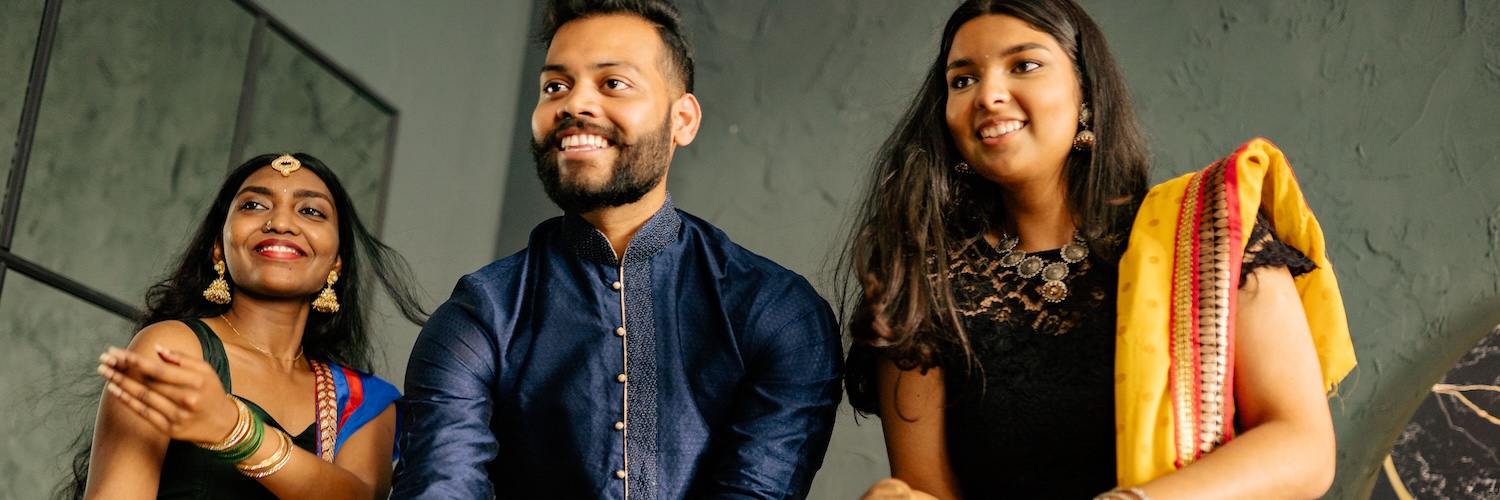
Khoj’s co-directors, choreographer Urja Desai Thakore and visual artist and filmmaker Hetain Patel, have combined Kathak, a classical dance form from northern India, with spoken word to create an emotionally powerful and visually striking performance. Khoj’s costume and scenographic design will challenge assumptions around South Asian bodies and representation on stage.
At the heart of the Khoj production is the co-directors’ lived experience as members of the Indian diaspora in the UK and their reflections on how identity evolves across generations. Twelve dancers use movement and object-based storytelling to explore the tensions between heritage and contemporary life, belonging and displacement, visibility and invisibility.
“Khoj is an opportunity to bring deeply personal stories of migration, identity and belonging onto a major stage through the language of Kathak and contemporary performance. It reflects the lived realities of many diasporic communities while challenging expectations of what South Asian dance can look and feel like today.”
More Success Stories
National Theatre

Royal Academy of Dance
